
Olive oil traceability: the authentication that protects the product — and the territory

Two opinion pieces published this month raise, from opposite angles, the same fundamental question: producing and marketing olive oil responsibly is not a technical detail — it is what underpins trust in an entire product and, with it, in the territory that gives rise to it.
Both are signed by Francisco António Vilela Ribeiro, president of the Murça Olive Growers’ Cooperative (CAOM) — one of the most awarded olive oil cooperatives in the country, based in one of the municipalities of our territory — and board member of FENAZEITES.
Two warnings about responsibility in production and marketing
In the first, in Agroportal, the author looks to exports: he questions what message reaches the world when blends of olive oil and vegetable oils are sold abroad under Portuguese imagery — warning that, in doing so, the reputation built by those who produce with rigour may be put at risk.
In the second, in Voz do Campo, he looks at the domestic market: olive oil sold in unlabelled containers, with no indication of who placed it on the market, often presented as “homemade” or “from the land”. His argument goes beyond traceability — it is that whoever puts food on another person’s table takes on responsibility for it, and that personal trust, the “I know him, he’s reliable”, neither removes that responsibility nor replaces the need to identify who answers for the product.
Two distant scenarios, but a single conclusion: without responsibility in production and marketing, and without traceability to authenticate origin, trust in olive oil is left hostage to those who least deserve it.
Why olive oil traceability shapes the territory

Here lies the point that concerns us directly. Olive oil that raises doubts does not harm only the person who sold it: the shadow spreads over the whole region.
When the lasting image is that of a “problem product”, the visitor who was seeking authenticity turns away — and turns away from the destination, not just the bottle.
Trás-os-Montes and Alto Douro do not, in most cases, compete on quantity or price. They compete on quality, distinction and authenticity.
That is the territory’s real asset — and it is precisely that asset a perception of carelessness would destroy first.
Protecting responsible production and traceability as a means of authentication is, therefore, protecting the destination’s very positioning — the heart of “One Place, One Story”.
Olive oil tourism as living proof of authenticity
This is also why olive oil tourism matters beyond the experience it offers.
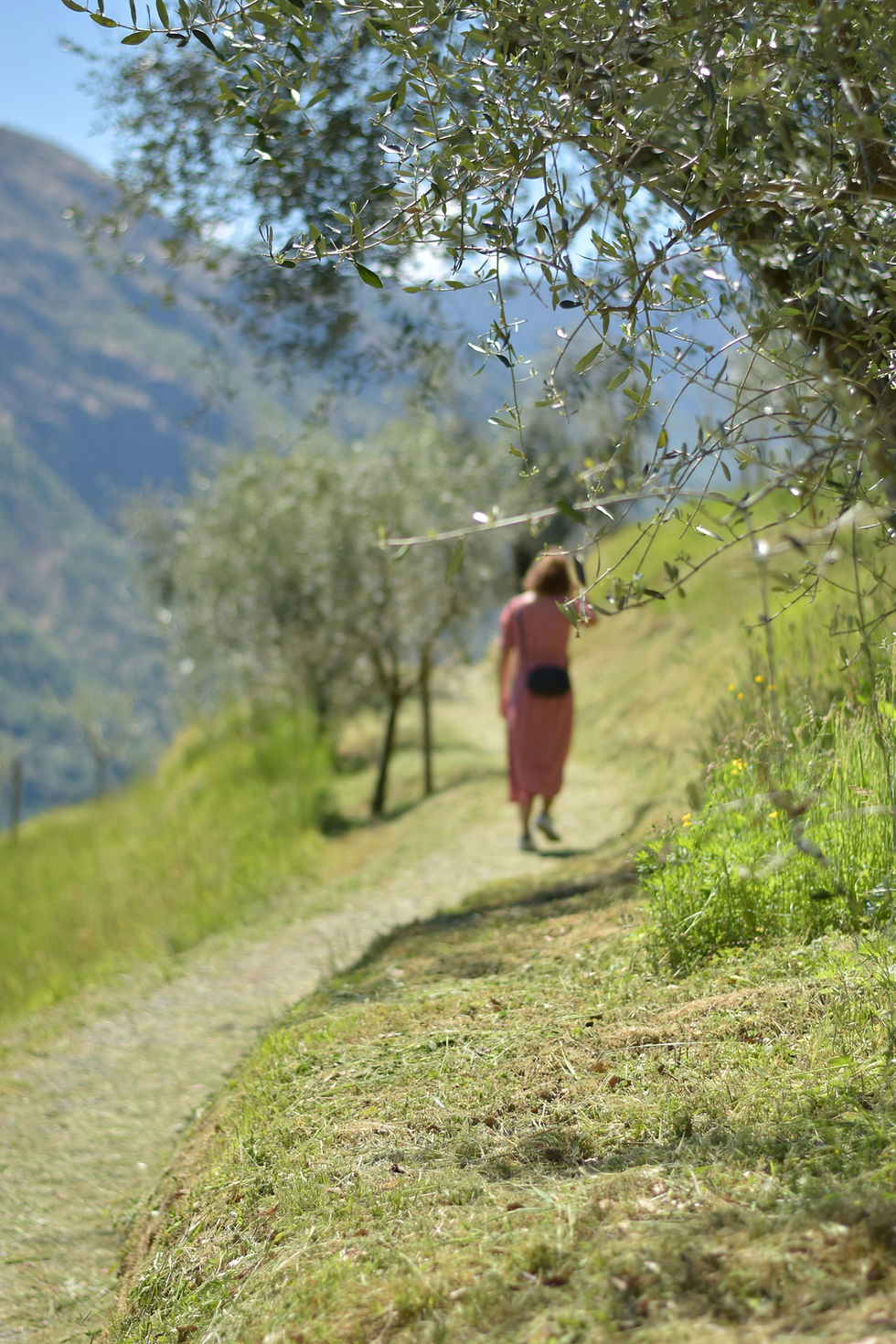
When a visitor walks through a centuries-old rainfed olive grove, talks to the person who makes the oil and tastes it fresh from the mill, origin stops being a word on a label and becomes verifiable before their eyes.
But — and here is the distinction these articles compel us to make — that closeness does not replace the responsibility of those who produce and market the oil: on the contrary, it only has value because it rests on a genuine product, made with rigour and by someone who answers for it.
It is responsibility that makes authenticity credible, not the other way around.
And it is that authenticity, grounded in a true product, that turns the circle in the territory’s favour. It is what brought the visitor here — and it is what leaves with them when they return home.
Those who have lived the genuine experience carry with them the conviction that this olive oil is a quality one, and become its ambassadors at their own table and among their own, carrying the product across borders that no campaign could reach alone.
Olive oil tourism does not fill coaches: it creates bearers of the message. But it can only play that role as long as there is, upstream, responsibility and traceability to guarantee that the story being told is true.
It was in this spirit that the region led the way with the first digital product passport for olive oil in Portugal, developed with Data CoLAB — a tool that makes a product’s provenance and journey verifiable to those who consume it. Responsibility, traceability and authenticity cease to be promises and become demonstrable.
Trust is an ingredient too — and in the North, it is an ingredient you can see, question and taste.
Discover the region’s producers and olive oil tourism experiences at azeiteanorte.pt.
Travel | Discover | Experience.
Sources
Francisco A. V. Ribeiro, “Estamos a exportar Portugal ou a desvalorizar o azeite português?”, Agroportal, 4 October 2026 — https://www.agroportal.pt/estamos-a-exportar-portugal-ou-a-desvalorizar-o-azeite-portugues/
Francisco A. V. Ribeiro, “O garrafão sem rótulo também conta uma história. O problema é que não sabemos quem a escreveu”, Voz do Campo, 15 October 2026 — https://vozdocampo.pt/noticia/1190/o-garrafao-sem-rotulo-tambem-conta-uma-historia-o-problema-e-que-nao-sabemos-quem-a-escreveu


Comments