
Wellness & Olive Oil: 90 minutes in nature change your brain

Series: Wellness & Olive Oil #3 | Reading time: ~7 minutes
You close your eyes. The phone has been silent in your pocket for twenty minutes. You hear water — a stream you cannot see but know is there, somewhere between the ash trees. The ground of earth and schist creaks under your feet. The air smells of rockrose, thyme, something you cannot name but your body recognises. And without deciding to, your jaw unclenches, your shoulders drop, your breathing lengthens. You did not choose to relax. It happened.
You are on a trail through centenary olive groves in Trás-os-Montes e Alto Douro, Northern Portugal, somewhere between the Terras de Cavaleiros Geopark and the Azibo reservoir. And you have just crossed the first 90 minutes of the next few days of your life.
What science says — and what the olive grove confirms

A study by the University of Exeter involving nearly 20,000 people, published in Scientific Reports, found that just 120 minutes a week in contact with nature is the threshold at which the probability of reporting good health and wellbeing increases significantly. It does not matter whether it happens all at once or spread across the week — what matters is that it happens. Below that threshold, the benefits do not materialise. Above it, gains continue up to 200-300 minutes, then plateau.
In Japan, Shinrin-yoku — forest bathing — has been clinically prescribed since the 1980s. Recent studies showed that 90 minutes of walking in a natural environment reduce cortisol levels, increase serotonin and oxytocin, and decrease activity in the brain region associated with rumination — that repetitive thought that will not leave you alone when you are stressed.
All of this is science. But when you walk through centenary olive trees in Northern Portugal, on a trail where the only sound is the wind and the only obstacle is beauty, science becomes sensation. And the sensation is: I am exactly where I should be.
Olive oil tourism as well-being: not a retreat, a landscape
The difference between Trás-os-Montes and a wellness retreat is simple: here you do not need to sign up for anything. There is no programme, no check-in at 2pm, no "guided meditation session at 4.30pm." There is a landscape of extremely low density — one of the least populated territories in Western Europe — where nature has not been turned into a product. It remains what it has always been: olive groves, rivers, valleys, sky.

The territory has 149 catalogued walking trails — from gentle riverside walks to altitude trails with views over the Douro and Tua valleys. And for cyclists, the cycling routes cross landscapes that change colour with the seasons: the deep green of olive groves in summer, the gold of almond trees in autumn, the white of winter frosts.
At every turn of the trail, the olive grove appears. Centenary trees, twisted by wind and time, resistant to the dry summer heat and the cutting winter cold. Walking among them is not just exercise — it is an act of presence. And this is where the 90 minutes begin to do their work.
Experiences that extend the wellbeing
After the trail, the territory offers ways to prolong that feeling — without destroying it with rush.
At Azibo Nature - Casinha da Fonte in Macedo de Cavaleiros, the accommodation sits in the village of Lamas, less than 10 minutes from the Azibo reservoir and 2 km from Podence — the village of the Caretos, a UNESCO Intangible Heritage tradition. It is a restored stone house, surrounded by Geopark landscape, built for waking without plans and falling asleep without screens.
For those who want to add movement and water to their day, the Horse Riding & Cruise experience (Sun Azibo) combines a horse riding lesson or carriage ride through a Transmontana village with a cruise on the Azibo reservoir aboard a solar-powered boat — 100% silent, zero pollution. You swim in the clean, warm water, taste a snack of regional produce on board, and realise that your brain is no longer in the mode it arrived in.

And if what you seek is water and silence in their purest form, the stand-up paddle and kayak experience on the Sabor Lakes takes you along untouched banks where the only company is the herons and the reflection of the hillsides on the water. A guided outing with Transmontania Tour or Douro on the Rocks adds context and safety without removing the feeling of being off the map.
For those who prefer to stop rather than move, the UNESCO Global Geopark Terras de Cavaleiros — which spans the entire municipality of Macedo — is a privileged territory for birdwatching and contemplative walks. The slopes around the reservoir shelter dozens of bird species nesting in the schist, and the silence is so complete you hear every wingbeat. You do not need a guide, you do not need equipment — you need to sit down and look. And if you want to try tai-chi outdoors with the olive grove as your backdrop, there are few landscapes in Europe more suited to it than this.
Getting your hands in the soil: the antidote to screens
There is a kind of wellbeing that no walk can replace: direct contact with the earth. Hands in damp soil, the smell of the kitchen garden, the gesture of picking what the land gave — without a phone, without gloves, without middlemen. It is something our bodies have known for thousands of years and that urban life took away without asking.
At Casa d'Abó Anica in Malhadas — 5 kilometres from Miranda do Douro —, this experience is daily life. Depending on the season, you can join the grain harvest, pick potatoes and pumpkins, help with the grape harvest, or prune fruit trees.

You can go to the henhouse to collect fresh eggs from the nest and feed the chickens. You can learn to cook as people cooked before — over a fireplace, with a cast-iron pot, with the produce you just picked.
And you can visit the Miranda donkeys, brush them, feed them, and understand why contact with animals is one of the oldest forms of therapy there is.
Malhadas is a mediaeval village on the Mirandese plateau, with the Pauliteiros, the Mirandese quelóquios and the landscape of the Meseta Ibérica Biosphere Reserve as a backdrop. It is the kind of place where you turn off your phone not because someone asked you to, but because you forgot you had one.
The next day: contemplation, birds and the Tua Valley Natural Park. All wellness.
Wellbeing in Trás-os-Montes does not end with a trail. It is an entire ecosystem.
At sunrise, before the heat arrives, sit on a village wall and watch. The red-rumped swallows under the eaves, the golden oriole in the fig tree, the kestrel above the grove. Trás-os-Montes is a migratory corridor and a nesting zone for dozens of species — and you do not need to be an ornithologist to feel the effect of 30 minutes of silent attention to a world that does not depend on you.
The Tua Valley Natural Regional Park — between Carrazeda de Anciães and Mirandela — adds another dimension: deep valleys carved by the Tua river, rich biodiversity, viewpoints over the Douro and an Interpretive Centre that presents the history and ecology of the region. It is the kind of place where an afternoon walk becomes a lesson without a teacher.
In the afternoon, the territory's river beaches — several with Blue Flag status — offer a swim that cleanses more than the body. The Azibo reservoir is minutes from several itineraries on our site.
At night, the sky. Trás-os-Montes has some of the purest conditions in Portugal for stargazing — very low light pollution, altitude, clean air. On summer nights, the Milky Way is so clear it looks painted. For city dwellers, seeing a sky like this does not need a scientific name: it is simply beautiful.
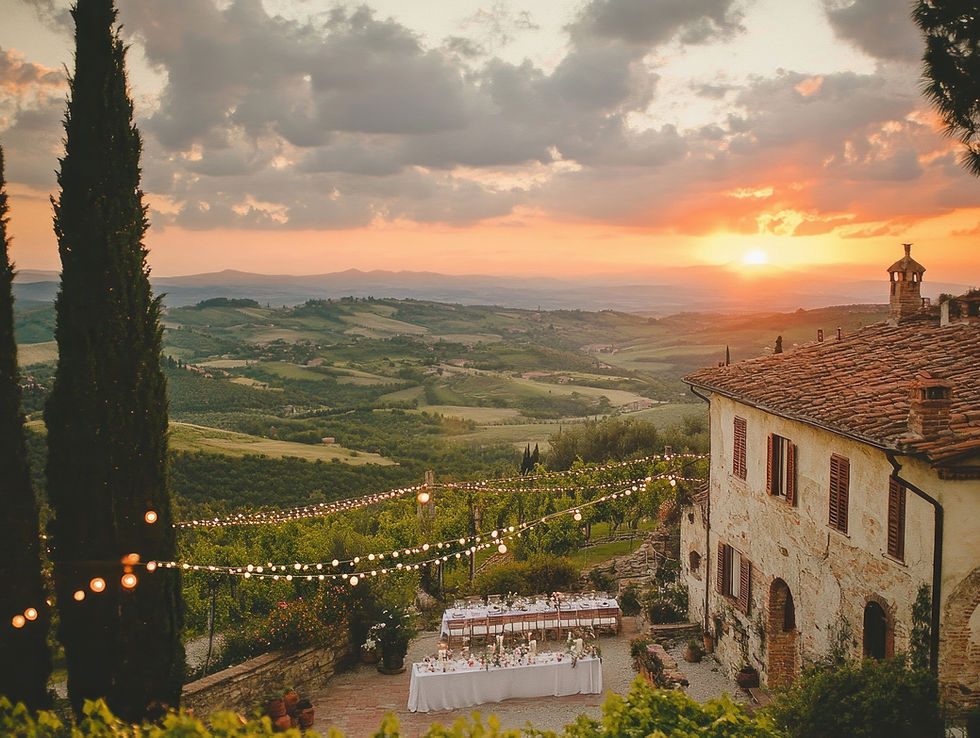
And at an outdoor dinner among olive trees, with the sun going down and a thread of olive oil on the bread — you realise that the 90 minutes have turned into days. And that nobody forced you to disconnect. It simply happened.
Who is this kind of travel for
For you, who spend your days between meetings, screens and notifications. For you, who take holidays but come back tired. For you, who have tried branded wellness retreats and realised that what you needed was not a programme — it was a place where time stopped running.
Trás-os-Montes is not a retreat. It is an entire territory where the rhythm of the day is decided by the sunlight and the will of whoever is there. And where olive oil tourism — visiting the grove, tasting the oil, talking to the producer — is the oldest and most honest form of wellbeing there is.
There is more to discover
Every time we publish an article about Trás-os-Montes, experiences are left untold — because the territory is larger than any blog.
If this post made you think about a weekend among olive groves and silence, explore the itineraries, producers, experiences, walking trails and cycling routes already on the site.
And if what you are looking for is not there yet, it probably exists but we have not found it yet — write to info@azeiteanorte.com and we will go looking together.
The olive oil of Trás-os-Montes cannot be explained. It must be tasted.
#AzeiteaNorte #OliveOilTourism #NorthernPortugal #TrásosMontes #Wellness #90MinutesInNature #Disconnect #SlowTravel #FoodTourism #TravelExperience #TaiChi #Canoeing #Birdwatching #Stargazing #DarkSky #RiverBeaches #ShinrinYoku #ForestBathing #Oleotourism #VisitPortugal #Summer #OliveGrove #SaborLakes #Agrotourism #HandsInSoil
Sources:
Study from Universidade de Exeter: White, M.P., Alcock, I., Grellier, J. et al. (2019). "Spending at least 120 minutes a week in nature is associated with good health and wellbeing." Scientific Reports, 9, 7730. DOI: 10.1038/s41598-019-44097-3
Shinrin-yoku / 90 minutes and rumination: Bratman, G.N., Hamilton, J.P., Hahn, K.S., Daily, G.C. & Gross, J.J. (2015). "Nature experience reduces rumination and subgenual prefrontal cortex activation." Proceedings of the National Academy of Sciences (PNAS), 112(28), 8567-8572. DOI: 10.1073/pnas.1510459112.
Shinrin-yoku e cortisol/serotonina: Li, Q. (2010). "Effect of forest bathing trips on human immune function." Environmental Health and Preventive Medicine, 15(1), 9-17.
Park, B.J., Tsunetsugu, Y., Kasetani, T. et al. (2010). "The physiological effects of Shinrin-yoku." Environmental Health and Preventive Medicine, 15(1), 18-26.


Comments