
Ancient Chestnut Groves: The Monumental Trees of the Terra Fria


Some trees are landscape. Others are territory — with centuries of root, trunks two people cannot embrace, and a canopy that shades an entire grove. The monumental chestnut trees of Trás-os-Montes’ Terra Fria are the second kind.
They are not a botanical curiosity. They are the living structure of a region that still works them, still respects them, and in October still picks them.
The Terra Fria and the chestnut tree: a relationship of centuries
The Terra Fria — the high plateau to the north, with Bragança and Vinhais at its centre — is one of Portugal’s great chestnut lands. The altitude, the long winter and the granite shape this ground in a way the olive grove does not reach: here the dry-farmed tree is the chestnut, not the olive, and the October landscape has another light — deeper gold, denser, with the soutos burning rust before the first frost.
The souto is the name for the chestnut orchard — the mountain garden, organised and inherited, that for generations fed families and communities. It is not spontaneous forest: it is a cultivated space, with trees chosen, pruned, known by the names given by whoever planted them. That is why the oldest soutos are as much garden as they are forest.
What makes a chestnut tree monumental
The monumentality of a tree is not measured only by height. It is measured by the time written into the trunk — the centuries of growth that leave bark as rough as stone, deep fissures, branches that were once whole trees in themselves. There are chestnut trees in the Terra Fria that are two, three hundred years old. Some mark property boundaries — the tree that stayed when everything else changed.
What makes these specimens singular is not just their size: it is their continuity. They still bear fruit. They are still picked. They are still part of the calendar of families who know each trunk by experience, not by catalogue.
October in the souto: what actually happens

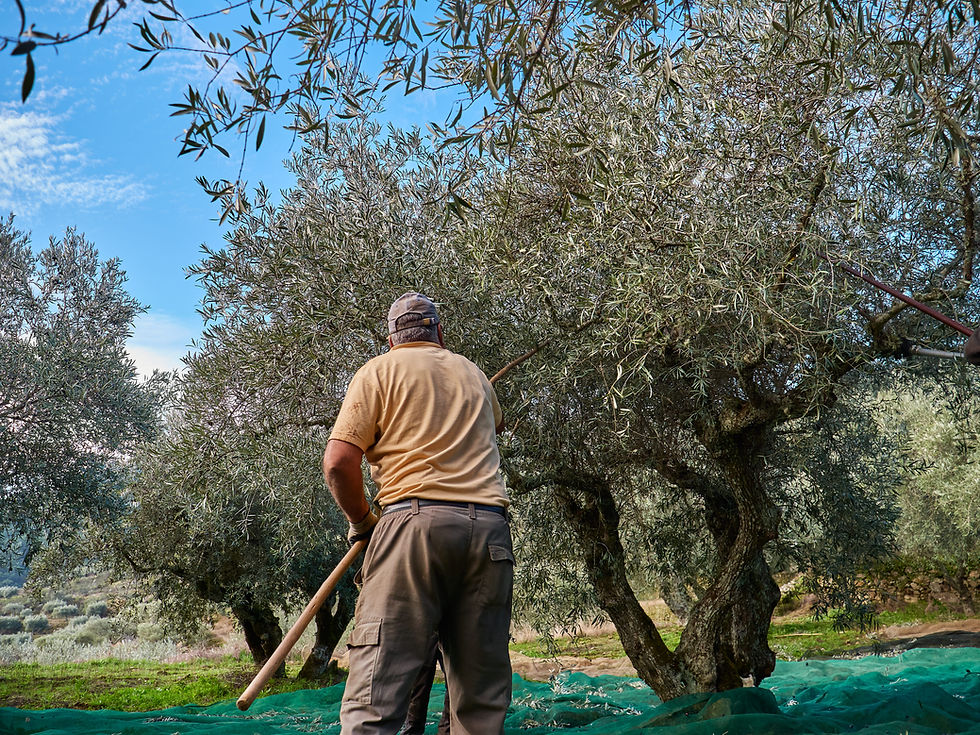
The chestnut does not wait. When the fruit is ripe, the husk — the spiny case that protects it — opens and lets it fall. The picking is daily while the season lasts: early morning, with gloves, by hand or with a rake, choosing and sorting in the souto itself. It is mountain work, done in quiet, with the smell of wet earth and rotting leaves underfoot.
In October, this happens at the same time as the olive grove begins to change colour and the mills prepare for the first pressing. The Terra Fria and the Terra Quente of Trás-os-Montes live different but simultaneous rhythms — and there are autumn weekends when it is possible to start the morning in a souto and end the afternoon tasting the new olive oil at an estate in the valley below.
Why going to see is not the same as knowing
Some landscapes make more sense up close than in a photograph. A souto of three-hundred-year-old chestnuts is one of them: the scale of the trunks, the way the canopy filters the midday light, the silence that exists there even when the wind is up outside. It is the kind of place that shifts your frame of reference — that makes you understand, without needing an explanation, how long this territory has been here.
The Serra da Nogueira, near Bragança, and the soutos of Vinhais are two natural entry points into this landscape. No elaborate programme is needed: mountain shoes, time to stop, and — if you go in the second half of October — a bag for the chestnuts.
How to weave it into a visit to the territory
The monumental chestnut tree does not need to be the only reason for a trip — but it can be the reason to go further north, to climb a little higher, to stay more than one day. The Azeite a Norte network has accommodation and producers across the full stretch from Terra Fria to the Douro Superior — enough to build two or three days with an olive grove in the morning, a souto in the afternoon, and a transmontana table at the end of the day.
Explore available experiences at azeiteanorte.pt/experiencia, producers at azeiteanorte.pt/produtores, and itineraries at azeiteanorte.pt/roteiros.
If you cannot find what you are looking for, write to us at info@azeiteanorte.com — we will help whenever we can.
The olive oil of Trás-os-Montes cannot be explained. It has to be tasted.
Hashtags:#AzeiteaNorte #TerraFria #Chestnuts #AncientGroves #NorthernPortugal #Bragança #Vinhais #SlowTravel #Autumn2026 #LivingHeritage #OliveOilTourism #VisitPortugal


Comments