
Ready to Book: The Harvest Experience, Step by Step

From arriving at the grove to tasting the oil while it's still warm — what actually happens, hour by hour, on a day of pole-harvesting in Trás-os-Montes.
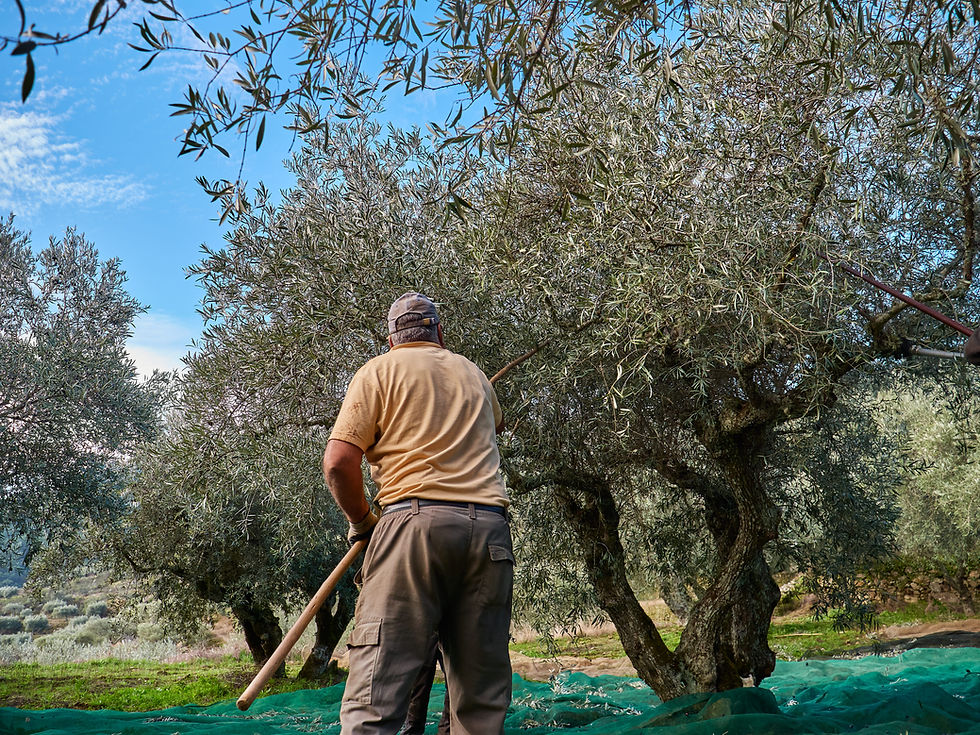
A harvest day in Trás-os-Montes doesn’t begin with work — it begins with a conversation in the olive grove. From arriving at the farm, to holding the rod, to the mill and tasting the still-warm olive oil: this is what happens, hour by hour, during a full day of vareja in October.
The Harvest Day
You don't need technical gear — just closed shoes, clothes you don't mind getting dirty, a light jacket for the morning, since Trás-os-Montes October mornings sit between 8 and 12°C, and the willingness to be outdoors for several hours. The producer usually has enough poles and nets for the whole group, so the day starts with a conversation, not with work: the farm gets introduced, the olive variety in front of you gets explained, and often someone shows you the difference between olives still green and those already changing colour — the same ripeness dilemma we've already covered here, which decides whether the final oil comes out more fruity and intense, or softer. While this conversation happens, nets or cloths get spread on the ground around the trunks of the first trees.
The picking itself
Then the picking itself begins. With the pole in hand, you tap the branches slowly until the ripe olives fall onto the net. It doesn't take strength, it takes rhythm, and that rhythm is learned within minutes — after a quarter of an hour nobody's thinking about technique anymore, just the conversation with whoever's next to them and the sound of olives dropping. The fallen fruit gets gathered by hand into crates, so air can circulate and the olives don't heat up before reaching the mill. It's still the method used on many Trás-os-Montes estates, not out of nostalgia, but because it preserves the fruit's integrity and lets you choose exactly what gets picked.
The mid-morning break
Mid-morning, everyone stops — it's almost always the most photographed moment of the whole day: home-made bread, sometimes chouriça or regional cheese, and a taste of last season's oil, just so there's something to compare later with what comes out of the mill that same day.
Afternoon: from the grove to the mill
In the afternoon, many experiences take the group on to the mill, to see — and in some cases take part in — the olives turning into oil: washing, crushing, extraction. That's where the moment almost everyone describes as the most memorable happens: tasting the new oil, still warm, served in a dark glass with a piece of bread. It's a flavour that only exists at this time of year, sharper and greener than oil bottled months earlier.
If it rains lightly, the picking continues, just with more layers on. Heavy rain usually means more time at the mill or on the tasting, adjusted directly with whoever is hosting you that day.
Where this already happens
For those who want to live this process specifically, there are experiences already available in the region: "Do Olival à Mesa" (From Grove to Table), run by Casa de Campo dos Távoras, combines grove work with the knowledge around olive oil; the Acushla Premium Tour includes a visit to the mill, the estate, and an oil tasting. Browse the full list of olive oil tourism experiences and contact directly the producer that interests you — there's no intermediation on our part, every experience is arranged directly with you. Also explore the available itineraries if you'd like to combine a harvest day with other stops in the region.
The olive oil of Trás-os-Montes can't be explained. It has to be tasted.
Sources:
Espaço Visual, "Choosing the right moment for the olive harvest";
Fábrica Douro, "Olive Picking";
Azeite a Norte, "Outubro no Olival: o Dilema do Ponto de Corte" and "Colheita da Azeitona 2026".
Hashtags: #AzeiteaNorte #OliveHarvest #PoleHarvesting #ReadyToBook #TrasOsMontes #OliveOilTourism #NewOliveOil #VisitPortugal


Comments