
June in the Olive Grove: the fall that defines the harvest — and the silence that accompanies it.

The month in which nature performs natural selection
It's the end of May. The flowering is over. You arrived at TMAD in June and, suddenly, you notice: there are flowers on the ground. Many flowers. They're falling from the branches as if nothing were happening. And nobody around you seems alarmed.
Welcome to physiological fall—the month when the olive tree makes a brutal choice: of all the flowers that were pollinated, only 1% to 3% will remain as fruit. The rest fall. That's how it works. (Article)
June is the month of natural selection in the olive grove. And it's fascinating to watch.
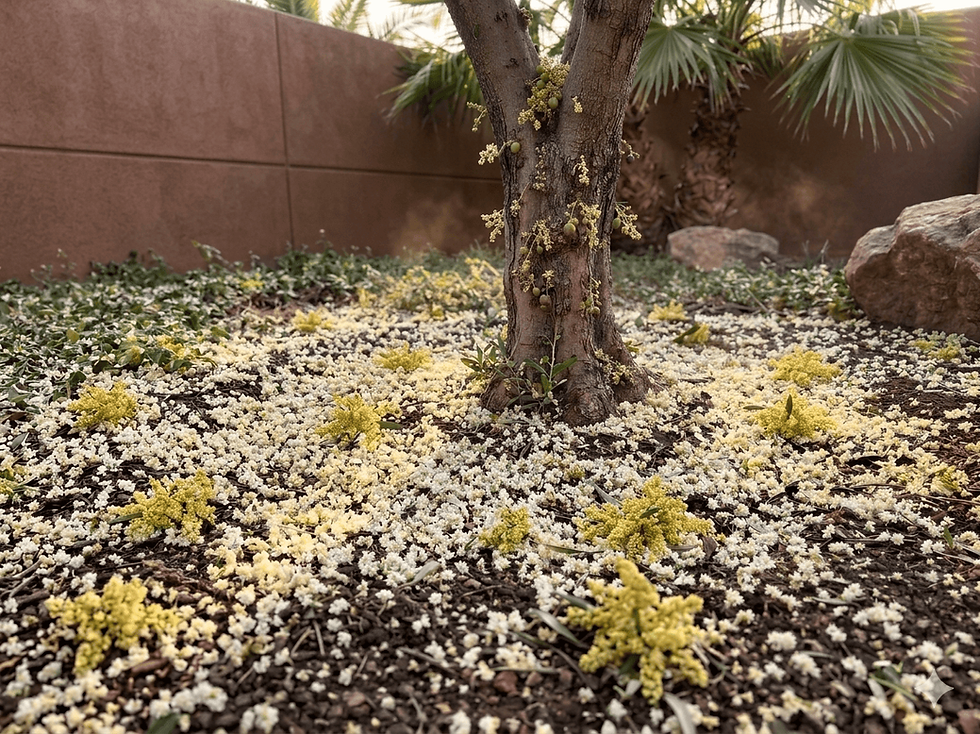
Physiological shedding: when nature discards
After the successful flowering in May, the olive tree faces a biological reality: it cannot feed all the fruit that begins to develop. So it does something seemingly cruel but biologically intelligent: it discards those it cannot sustain. (AgroB)
This process is called physiological fall or June fall. It can last up to 4 weeks. During this period, the olive grove floor is literally covered with fallen flowers and small aborted fruits.
For the tourist, this seems like a disaster. For the olive grower, it's a relief.
Why is this positive?
The olive tree has limited resources. If it tried to feed 10,000 small fruits, they would all remain small, poor in quality, and the tree would suffer the following year. By discarding 99-97% of the fruits at the beginning, the tree concentrates all its energy on the remaining 1-3% — which become higher quality olives, larger, with a better oil content. (RCAAP)
It's natural selection. Without it, there is no quality olive oil.
What is changing in the olive grove in June
Visual Landscape:
In May, you saw white flowers among the foliage. In June, these flowers disappear from the branches and appear scattered on the ground, transforming it into a veritable white carpet.
The olive grove changes dramatically in just 3-4 weeks.
Climate:
June in Trás-os-Montes already feels like true summer—long days, still occasional rains (which help the olive tree in this initial water stress phase). It's not yet the extreme heat of July/August.
This climate is important: physiological fruit drop depends heavily on water availability.
A dry June accelerates fruit drop (the olive tree "gives up" more fruit); a June with rain reduces the intensity of the drop. (Article)
Work in the olive grove:
In June, the olive grower observes more than works. He walks among the trees, analyzes the intensity of the fruit drop, makes estimates: "This year may have a low yield" or "The trees managed to keep many fruits—a good harvest in sight."
There are no specific treatments for June (unlike May, when pollination was monitored). It's a time to wait, observe, and trust.
Why June is special for visitors

For the curious observer (Cultural Heritage Enthusiast, Slow Tourism Family): June is a quiet month in the olive grove. Without the expectation of flowering (May) or the activity of harvesting (October–November), June is pure contemplation. The landscape is at its best: still green, still with occasional rain, fresh air.
It's the perfect month to understand that agriculture is not just action—it's also waiting, observation, decision-making based on subtle signs from nature.
For the photographer: The falling flowers create unusual landscapes. The olive grove floor covered in tiny white flowers, with rays of sunlight filtering through the foliage, is a visual subject few know and offers unique compositions.
For those who want authentic conversation: June is when olive growers really talk. Without the rush of harvesting, without the anxiety of flowering, there is time for stories. Stories of past harvests, of difficult years, of predictions for the future.
If you're visiting Trás-os-Montes and Alto Douro in June to genuinely talk to a producer, this is the ideal month.
What to do in June: active contemplative itineraries
Basic Experience: "Observing Physiological Olive Fall" (2–3 hours)
Morning walk through an olive grove in full olive fall — observe the ground, collect fallen flowers (many use them for tea), talk to the producer about harvest estimates. Ends with coffee at the olive press and observation of the small olives that will remain until October.
Contact producers at azeiteanorte.pt/produtores.
Itinerary: "Silence of the Olive Grove" (full day)
Morning: reflective walk through olive groves during a period of physiological decline.
Midday: lunch at a farm overlooking the olive grove.
Afternoon: walking route through olive groves, fields and villages of Trás-os-Montes with a stop at a viewpoint or fountain.
Focus: contemplation, June light, photographs.
When to go in June: a practical guide
Period | What to expect | Recomendation |
1–10 june | The fall is still intense; many flowers on the ground. | Ideal for watching the waterfall |
11–20 june | Moderate decline; landscape is now "cleaner" | It's still good; fewer flowers on the ground. |
21–30 june | The fall is ending; the landscape is quite "clean". | Good for clean photos; less visual drama. |
Note: The intensity of the fall varies greatly depending on the weather in June — rain reduces the fall; drought accelerates it. Confirm the current situation with a producer. (Article)
The olive oil that arrives in October
The tiny olives that remain after the physiological drop in June are the ones that will reach October—those that will yield the olive oil you will taste at the end of the year.
This means: the olive oil you drink in November was decided in June.
It's a poetic way of understanding: June is not a month of dramatic action. It's a month of silent selection. And that selection defines the quality of the entire year.
What to pack for June
Bring:
Comfortable hiking clothes
Camera — the June light is soft and perfect
Notebook — for taking notes during conversations with producers
Contemplative patience
Expect:
Landscape that changes day by day
Olive grove floor literally covered in flowers
Stories from olive growers about past harvests
Silence — the kind of silence that invites reflection
Food with territorial roots
Understanding that agricultural beauty also lies in the invisible decisions
June: the month nobody talks about, but that matters
June in the olive grove doesn't have the drama of May (flowering) nor the activity of October (harvest). It has something rarer: productive silence.
If you only come to TMAD during peak seasons, you miss this: the month when nature makes its most important choices without spectacle, without drama, only with the implacable logic of biology.
June is for those who want to understand, not just observe. For those willing to spend hours walking among olive trees knowing that the main spectacle has already passed—but that the real work, the invisible work, is happening.
🫒 Mark the date. Contact a producer. Come observe the silence.
Explore producers, itineraries and experiences at azeiteanorte.pt/produtores e azeiteanorte.pt/roteiros.
Keywords and Tags: #JuneInTheOliveGrove #OliveGrowingTMAD #PhysiologicalDrop #OliveTourism #ExperientialTourism #TrasOsMontes #Douro #NorthernOliveOil #SlowTravel #RuralTourism #DiscoverPortugal #JuneInNorthernPortugal
References:


Comments