
Almond and Olive Oil: When the Flower Transforms into Flavor


Even before spring officially arrives, a spectacle announces its arrival in Trás-os-Montes and Alto Douro: the almond trees in bloom. White and pink patches cover the slopes, contrasting with the dark schist and the still-grey olive groves of winter. It's a visual promise that something good is on the way—and that "something" goes far beyond beauty.
Almonds and olive oil share not only the same Trás-os-Montes terroir, but also a centuries-old history of coexistence at the table. They are products that complement each other naturally, both fruits of trees that have learned to thrive in difficult soils, both symbols of a region that transforms adversity into excellence.
Almonds: A Treasure from Trás-os-Montes and Alto Douro
Trás-os-Montes holds the largest almond orchard area in Portugal — more than 25,000 hectares that make this region the heart of national almond production. This is no coincidence. The almond tree (Prunus dulcis) has adapted perfectly to the stony, sloping, and schist soils that characterize the Trás-os-Montes landscape, finding here the ideal conditions to produce almonds of exceptional quality [1].
The Trás-os-Montes Almond has held Protected Geographical Indication (PGI) status since 2020, a recognition that certifies not only its origin but also the unique characteristics that distinguish it. The extreme climate — harsh winters and scorching summers — and the privileged sun exposure give it a flavor and texture that make it unmistakable [2].
And then there is the Moncorvo IGP Coated Almond, chosen as one of the 7 Sweet Wonders of Portugal — a product that is simultaneously a work of art and a living tradition. Handmade by the famous "coating women", these almonds are coated with sugar through an artisanal process that can last eight days, with turns and more turns in a copper bowl. Documented since 1908, this technique remains unchanged, passed down from generation to generation as a know-how that refuses to be rushed [2].
Traditions that Nourish Identity
There is a tradition from Trás-os-Montes that perfectly sums up the social role of almonds: the splitting. This collective ritual of splitting or crushing almonds was carried out together by neighbors, often in the evening, providing an opportunity for socializing with conversations, songs and games. It was not just work — it was community, mutual help, identity [3].

Torre de Moncorvo keeps this tradition alive through periodic reenactments that bring generations together. In 2023, more than 130 elderly people and hundreds of children gathered to crack almonds together, in an initiative that demonstrates how cultural heritage can unite people of all ages. For the younger ones, it was a lesson on how daily tasks were performed in the past. For the older ones, an opportunity to relive past times and transmit knowledge [3].
Another beautiful tradition associated with almonds is present in Transmontane weddings: the newlyweds receive five almonds, each representing a blessing — happiness, fertility, wealth, health and longevity. It is a symbolic gesture that spans generations, connecting the present to a past of shared values.
Almonds and Olive Oil: A Pair with History
When we talk about the combination of almonds and olive oil, we are not inventing a gastronomic trend. We are talking about something that has always existed in the cuisine of Trás-os-Montes, in a natural and organic way. Both are pillars of the Mediterranean Diet, recognized by UNESCO as Intangible Cultural Heritage of Humanity [4].
The extra virgin olive oil from Trás-os-Montes DOP has a unique sensory profile — fruity, with almond notes, balanced between sweet, green, bitter and spicy. It is no coincidence that one of the characteristic aromatic notes of Trás-os-Montes olive oil is precisely almond. It is as if the two trees, growing side by side on the same schist slopes, had developed a natural affinity.
This connection is revealed in multiple ways in regional gastronomy. For centuries, roasted and ground almonds have been combined with olive oil to create sauces and marinades. For centuries, convent sweets from Trás-os-Montes have used fine olive oil in the doughs that envelop almond fillings. For centuries, almonds and olive oil have been served together at the table in Trás-os-Montes, each enhancing the qualities of the other.
From Tradition to Contemporary Dish
The most traditional way to combine almonds and olive oil in Trás-os-Montes and Alto Douro is through confectionery. The Almond Sweets of Mós do Douro, produced for over 250 years, are a perfect example [5]. In these delicate creations, olive oil is incorporated into the dough that surrounds the almond filling, creating a unique texture. The thickness of the sliced almonds must be as thin as that of an orange blossom – a detail that requires mastery and patience.
But the almond-olive oil duo also shines in savory preparations. Toasted and crushed almonds with olive oil create a Transmontano pesto that perfectly complements regional cheeses or serves as a base for sauces. Sliced almonds sautéed in generous olive oil, with garlic and aromatic herbs, become a crunchy topping for salads, roasted vegetables, or even cod.
There is also the simple gesture that surprises: a drizzle of new olive oil, still green and spicy, over Moncorvo Covered Almonds. The oil's richness balances the intense sweetness of the sugar, creating an unexpected taste experience—it's sweet, it's salty, it's bitter, it's complex. It's Trás-os-Montes and Alto Douro in a single flavor.
The Terroir that Unites Two Trees
When we taste almonds and olive oil from Trás-os-Montes and Alto Douro together, we are tasting a territory. The same schist soil that forces the almond tree to create deep roots is the soil that gives the olive oil its mineral notes. The same intense sun that ripens the almond is what concentrates the aromas in the olive oil. The same climatic extremes that test both trees are what make them resilient and producers of exceptional fruit.
There is one word that explains all this: terroir. It is the set of environmental, human, and cultural factors that make a product unique and impossible to replicate outside the place where it is born. The almonds of Trás-os-Montes and Alto Douro and the olive oil of Trás-os-Montes and Alto Douro share the same terroir—and that is what makes their combination so perfect and so true.
This terroir is also manifested in the people. It is the farmers who keep the centuries-old almond groves and ancestral olive groves alive. These are the "cobrideiras" (women who cover almond trees) who perpetuate techniques from over a century ago. These are the communities that gather for feasts and celebrations of the almond blossoms. It is a living, dynamic heritage that refuses to be stuck in the past while honoring its roots.
Flowers Today, Flavor Tomorrow
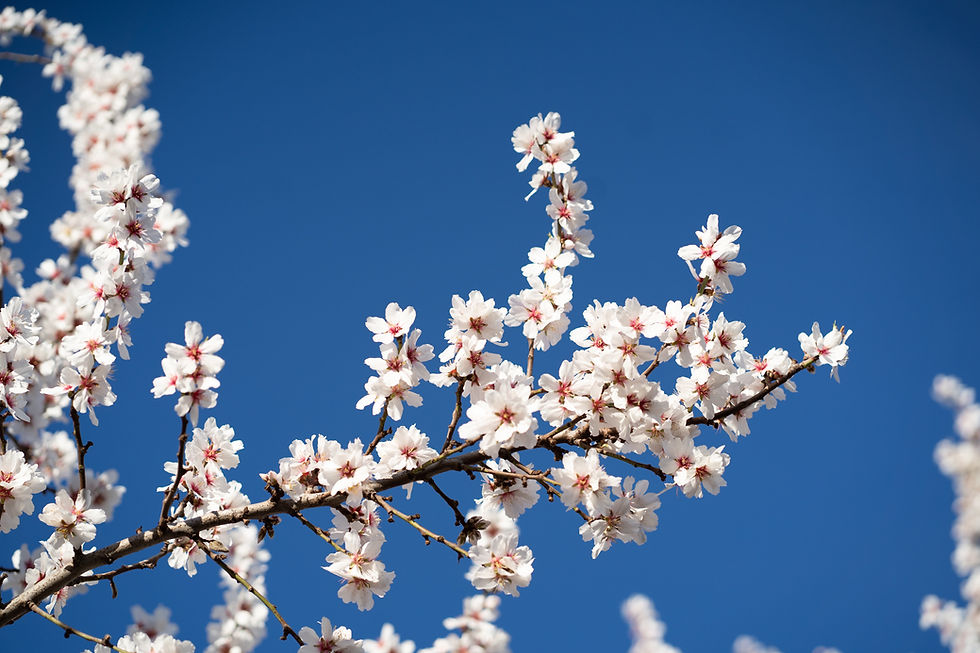
At this time of year, when the almond trees burst into white and pink blossoms, one thing is certain: in a few months, these flowers will transform into almonds. And when they reach the table, whether in the form of Moncorvo Covered Almonds, or as an ingredient in a traditional sweet or a contemporary dish, they will likely be accompanied by a drizzle of olive oil.
Because there are combinations that don't need to be invented—only rediscovered. There are products that demand to be together because they were born in the same landscape, shaped by the same hands, and are part of the same identity. Almonds and olive oil from Trás-os-Montes and Alto Douro are two such products.
They are the flower that announces spring and the fruit that nourishes generations. They are the collective work of sorting and the solitary gesture of covering almonds for days. They are tradition and innovation, past and future, root and wing.
Come Live This Story
If you truly want to understand what almonds and olive oil from Trás-os-Montes and Alto Douro are all about, you have to come to the region. Visiting an almond grove in bloom at the end of January or beginning of February is to witness one of the most beautiful natural spectacles in Portugal. Watching the "cobrideiras" (almond grove harvesters) at work is to witness a ritual that defies time. Tasting the products where they originate is to discover flavors that don't exist outside this terroir.
Two Products, One Soul
Almonds and olive oil from Trás-os-Montes and Alto Douro are more than just ingredients—they are expressions of a way of being in the world. They represent the patience of waiting for the trees to grow and produce. They represent respect for techniques perfected over centuries. They represent the generosity of a land that, despite its difficulties, offers products of rare quality.
When we combine almonds and olive oil in the same preparation, we are celebrating Trás-os-Montes and Alto Douro. We are honoring the "cobrideiras" (almond harvesters) and the olive growers, the harvesting and the picking. We are keeping alive an identity built on the relationship between people, land, and tradition.
Because there are flavors that only make sense where they are born. And almonds with olive oil in Trás-os-Montes and Alto Douro is one of those flavors—deep, true, rooted in a landscape that every year dresses in white flowers to announce that beauty and flavor are born from the same land.
Tasting Tip: For an authentic experience, try Moncorvo Almonds with a drizzle of fresh, still green and spicy olive oil, served on cured cheese from the region. Pair it with Douro wine and cornbread. It's Trás-os-Montes and Alto Douro in a single tasting.
Visit: Meet the olive oil producers in https://www.azeiteanorte.pt/produtores and plan your olivetourism experiences in https://www.azeiteanorte.pt/experiencia


Comments